Friday, November 9, 2018

Democrats Have Their Work Cut Out for Them

Election night was pretty good for Democrats. They retook the House and will probably flip between 35-40 seats. That will beat the historical average for a party not controlling the White House in the midterm elections. They also picked up at least 7 governorships although they had hoped for 9. It's possible that the governor races in Florida and Georgia will head to a recount, but seldom do recounts change the outcome ("Recounts Rarely Reverse Election Results"). Interestingly, although there are more Republican than Democrat governors, more US citizens will live in a state with a Democrat governor than in one with a Republican governor (if you can't figure out why this is true, then you probably need to revisit what you learned in your 5th or 6th grade math class). Democrats also made impressive gains at the state level, picking up approximately 300 state legislative seats. These gains, along with the gain in governorships, could have major implications for the 2020 elections since district lines are typically drawn by state legislatures.

If there was a disappointing outcome for Democrats, it was in the Senate where it looks like they'll lose at least two seats to Republicans. Although they won at least 23 of the 36 seats up for grabs this year, most of these were seats where Democrats were incumbents. In fact, they had to defend 10 in states that Trump won in 2016, and they lost at least three — and maybe as many as five — of those. The silver lining is that the electoral map will shift in their favor in 2020 when Republicans will have to defend more seats than Democrats. There are three races still to be decided: one in Arizona, one in Florida, and one in Mississippi. Mississippi will almost certainly break for the Republicans, but Arizona may end up in the hands of Democrats. Who knows about Florida. What is it about Florida?

Finally, it's helpful to recall that after Republicans wrested control of both houses of Congress from the Democrats in 1994 (Clinton was President), many assumed that in 1996 Clinton wouldn't be reelected. However, the economy improved and Clinton won a fairly easy reelection over Bob Dole. There's a lesson there. It always is tough to beat an incumbent President and even more so when the economy is strong. Thus, in spite of the fact that the results suggest a switch back to the Democrats in midwestern battleground states ("The 2018 Map Looked A Lot Like 2012 … And That Got Me Thinking About 2020"), it will still take a lot to unseat President Trump if the economy remains strong. It won't be impossible, but in order for that to happen, Democrats have their work cut out for them.

Monday, November 5, 2018

The Election is Looking Good for Both Democrats and Republicans

The election's tomorrow, and if we're to believe the polls and prediction markets, Democrats should recapture the House, while the Republicans should hold on to the Senate. FiveThirtyEight's model, which is based largely on polling but includes other factors that tend to influence midterm elections (e.g., which party controls the White House, fundraising, strength of the economy, etc.), places the probability that Democrats win control of the House at around 88% and that the Republicans maintain control of the Senate at around 81%. Prediction markets are a little less sanguine on the Democrats chances. They only give Democrats a 70% chance of winning the House and a 11% chance of  winning the Senate.

Probabilities are just that, however. An 80% chance that something will happen means that given the current conditions (related to whatever event you're considering), 80% of the time the event will occur, but it also means that 20% of the time it won't.

An intriguing question, though, is how this time around pollsters have handled "outliers." Outliers are survey responses that lie outside of the population trend. They can result from chance or measurement error, and they can throw statistical analyses out of kilter. Pick up almost any academic article that employs a form of statistical analysis (e.g., multivariate regression), and there's a strong chance it'll include "robustness" checks that test or control for outliers.

The key, of course, is whether a perceived outlier is actually an outlier or whether it reflects ground truth. Given what happened in 2016, it wouldn't surprise me in the least to learn that pollsters have been a little conservative when encountering results that appear to favor Democrats. That is, because 2016 polls seemed to have underestimated support for Donald Trump, I can imagine pollsters  dropping any "outliers" that seem to overestimate support for Democrats. If this has indeed occurred (and to be clear I have no evidence that it has), it could mean that Democrats might do better in their quest for seats in both House and the Senate than predicted by current models. That would indeed be a surprise. Almost as surprising as the 2016 presidential election (but not quite).

Monday, October 29, 2018

The Best Team Doesn't Always Win the World Series (but it did this year)

The American theoretical physicist, Leonard Mlodinow, has noted in his wonderful book, The Drunkard's Walk: How Randomness Rules Our Lives, that a 7-game World Series isn't long enough to absolutely guarantee that the best team will win. He notes that
if one team is good enough to warrant beating another in 55% of its games, the weaker team will nevertheless win a 7-game series about 4 times out of 10. And if the superior team could beat its opponent, on average, 2 out of 3 times they meet, the inferior team will still win a 7-game series about once every 5 match-ups. There is really no way for a sports league to change this. In the lopsided 2/3-probability case, for example, you’d have to play a series consisting of at minimum the best of 23 games to determine the winner with what is called statistical significance, meaning the weaker team would be crowned champion 5 percent or less of the time. And in the case of one team’s having only a 55-45 edge, the shortest significant “world series” would be the best of 269 games, a tedious endeavor indeed! So sports playoff series can be fun and exciting, but being crowned “world champion” is not a reliable indication that a team is actually the best one. (p. 70-71)
Mlodinow's a very smart guy, and I have no reason to doubt that his math is correct. That said, I think we're safe in assuming that this year's World Series winner, the Boston Red Sox, were the best team ("The 2018 Red Sox Are Baseball’s Best Champions Since The 1998 Yankees"). They won a franchise-best 108 games during the regular season, and took 11 out of the 14 games they played during the playoffs. Nevertheless, there was no guarantee that they'd win the World Series, and after Yasiel Puig put the Dodgers ahead 4-0 in the 6th inning of the 4th game, I thought there was a real chance the Dodgers just might pull off the upset. But at least this time, randomness didn't step in and ruin the Red Sox's amazing season. Instead, Dodger manager Dave Roberts did ("Dave Roberts Does it Again"). He pulled Rich Hill, the Red Sox came back, and the rest (as they say) is history.

Saturday, October 27, 2018

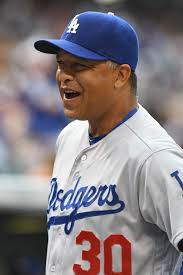
Dave Roberts Does it Again

I've been ranting about this for several years ("Let Starters Finish!", "Not to Beat a Dead Horse", "The Closer Temptation is Hard to Resist", "MLB's Ridiculous Obsession with Closers", "Not Everyone Can Throw Like Mariano Rivera"), but why do today's MLB managers feel the need to pull starting pitchers when they're throwing great? When someone has the entire offseason to rest, who cares about pitch counts? Evidently, Dodgers' manager Dave Roberts does. Tonight, with Rich Hill shutting down the Red Sox bats (and the Dodgers leading the Sox 4-0), Roberts pulled Hill after throwing 91 pitches (and striking out the last batter he faced), and the Dodgers bullpen promptly imploded. The Red Sox scored 9 runs and ended up winning 9-6.

This isn't the first time Roberts has done this ("Thank You, Dave Roberts"). Back in August when the Giants were still in the hunt for a playoff spot, Roberts pulled Clayton Kershaw after pitching 8 innings with the Dodgers leading 2-1, and the Dodgers' relievers gave up 4 runs and the Giants won 5-2. And as Dodgers' fans will remind anyone who listens, Roberts pulled Hill after only 4 great innings in the second game of last year's World Series, which ultimately led to a Dodgers' loss.

Of course, a part of me isn't complaining (I am a Giants' fan, after all). Nevertheless, maybe MLB managers will one day figure out that although pitch counts are important and it's great to have a shutdown closer, sometimes you need to need to let your starters finish and not every closer is as good as Mariano Rivera ("Not Everyone Can Throw Like Mariano Rivera").

Saturday, September 29, 2018

Lamenting Bill Cosby's Fall From Grace

The sentencing of Bill Cosby for indecent assault for 3-10 years was a stark reminder of how far the former comedian and television star had fallen. I grew up listening to his comedy records: Bill Cosby is a Very Funny Fellow...Right!, I Started Out as a Child, Why is There Air?, and Sports. It didn't matter how many times I listened to them, I always laughed at his sketches about "Noah," "Neanderthal Man," "Street Football," "Rigor Mortis," "Driving in San Francisco," "Track and Field" (High School and Mile Relay), and so on.

And like most Americans in the 1980s, I made a point to flip on the TV when The Cosby Show aired. After so many years, it's easy to forget that it upended a number of stereotypes. At the time some criticized the show for not being more explicit about civil rights, but I've always thought that by portraying a middle-class Black family where the lead characters were an attorney and a doctor, and the kids aspired to attend college, The Cosby Show shattered the stereotypes that many people had about African-Americans. And that's nothing to sneeze at.

Thus, along with many others, I lament Cosby's fall. Not that I don't believe the charges against him. I do. It's just hard to get my head around how someone who did so much good, could also do so much bad.

Wednesday, September 5, 2018

Do Umpires Favor the Home Team?

So, I've been playing around with the pitch locations and related umpire calls in order to see if there's a umpire bias. Here, I'm just looking at home vs. visiting team, and it is only one game. Still it is interesting. The first graph is for the visiting team's pitcher, Dereck Rodriguez ("Pudge" Rodriguez's son), while the second is the home team's pitcher, German Marquez (from last night's game between the Giants and Rockies). The pitch locations are for called strikes and balls -- in other words, pitches at which the batter didn't swing, so the umpire had to decide whether the pitch is a strike or a ball.


There's a statistical test for this, but a quick glance suggests that the home team received better calls than the home team did. This, of course, is only one game, so we shouldn't generalize. I will return in a later post with a more substantive analysis that will examine umpire patterns for all of major league baseball, dating back until 2008. I first need to figure out how to store all that data, however.

Monday, September 3, 2018

Here's One Giants' Fan Who's Rooting for the A's


A few years back someone who worked for me asked if I was gearing up for the big rivalry games that coming weekend. "Who's playing?," I asked. "A's and Giants", my friend said. "You're kidding, right?," I replied, "The A's aren't the Giants' rivals. The Dodgers are." And so it is. While it's true that when the Giants and A's play one another, I pull for the Giants, the reason why I don't consider the A's the Giants rivals is because when the Giants aren't playing the A's, I'm usually pulling for the A's. That's not true for the Dodgers. It's a very rare day when I pull for the Dodgers -- in fact, it's only when a Dodger win will benefit the Giants. Someone far wiser than I once stated that they had two favorite teams. The Giants and whatever team's currently playing the Dodgers. I couldn't agree more (in other words, I was a Mets fan today).

If you find this weird, blame my parents. They raised me to root for ALL of the Bay Area teams: the Giants, A's, Niners, Raiders, Warriors, and all the local universities: Santa Clara, Stanford, Cal, San Jose State, St. Mary's, and so on.

In other words, I'm really happy that the A's will probably reach the playoffs this year, and I sure hope they beat the Yanks in the play-in game (just like they did today). To be sure, when Bay Area teams play one another, I pull for my favorites (e.g., Giants over A's, Niners over Raiders), but don't confuse a "favorite" with a "rival." They're not the same. At least not in my book.